




Beauty guide
Tabrima: the traditional body mask of the Moroccan hammam
Arij Al Ghaba Cooperative ·
Less known than black soap, tabrima is nonetheless one of the secrets of the Moroccan hammam. This traditional preparation of aromatic plants is applied to the body for a moment of cleansing and relaxation.
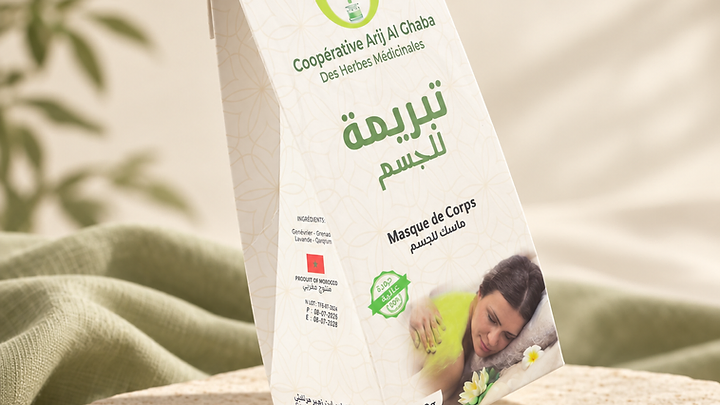
What is tabrima?
Tabrima is a blend of aromatic plants and spices ground to a powder, prepared according to Moroccan family traditions. The cooperative's version combines coriander, lavender and cumin. Its warm, herbal fragrance is typical of traditional hammams.
How to prepare it
Pour the desired amount into a bowl and gradually add lukewarm water, or rose water, until you obtain a supple paste — neither too runny nor too thick. Prepare it just before use.
When to apply it?
Tabrima is applied after the black soap and the kessa-mitt exfoliation, on clean, still-damp skin:
- spread the paste over the body, avoiding the face and mucous membranes;
- leave on for about ten minutes in the warmth of the hammam;
- rinse thoroughly with lukewarm water.
Which products to pair it with?
Rose black soap and nila black soap prepare the skin before tabrima. For oilier skin, you can alternate with the green clay mask with argan oil and orange blossom.
Precautions
Some plants and spices may not suit very reactive skin: test on a small area before first use. Store the powder dry, away from light.
Products in this guide

 100 g
AG-MAS-05
Masque de corps « Tabrima »
The hammam secret, in its case.

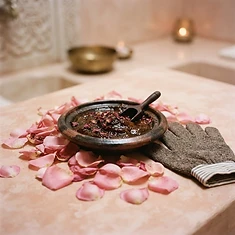 200 g
AG-SAV-12
Rose black soap
The hammam, in a floral version.

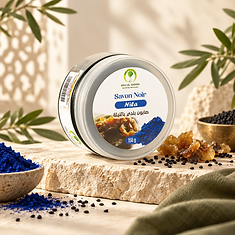 150 g / 200 g
AG-SAV-11
Nila black soap
The hammam starts here.

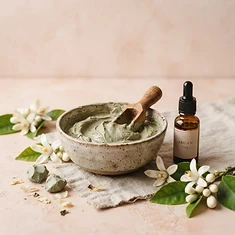 300 g
AG-MAS-02
Green clay mask with argan oil and orange blossom
The clay of Haouz, enriched.
Other guides
The Moroccan hammam ritual: steps and products
Black soap, kessa mitt, tabrima, clay mask: the Moroccan hammam ritual step by step, with the natural products of the Arij Al Ghaba cooperative.
Read the guideNila black soap: what it is and how to use it
Everything you need to know about Moroccan nila black soap: origin, contact time, use in the hammam with the kessa mitt and precautions. By the Arij Al Ghaba cooperative.
Read the guideArgan or prickly pear: which care to choose for your skin?
Argan oil or prickly pear seed oil: differences, textures and tips for choosing your Moroccan face cream. Guide by the Arij Al Ghaba cooperative.
Read the guideThe plants of Moroccan tea: chiba, verbena, thyme, sage…
Chiba (mugwort), verbena, zaytra thyme, sage, marjoram: the aromatic plants that flavour Moroccan tea, and how to use them. Atlas plants by Arij Al Ghaba.
Read the guideHow to choose a cosmetics cooperative in Morocco?
ISO 22716 certification, traceability, composition, labelling: the criteria for choosing a natural cosmetics cooperative in Morocco, as an individual or a professional.
Read the guideHuile de ricin pour cheveux, cils et sourcils : mode d'emploi
Comment utiliser l'huile de ricin sur les cheveux, les cils et les sourcils : quantité, temps de pose, fréquence et précautions. Guide de la coopérative Arij Al Ghaba.
Read the guideGommage au café pour le visage : comment l'utiliser
Gommage au café pour le visage : mode d'emploi, fréquence (1 à 2 fois par semaine), erreurs à éviter et soin à appliquer après. Coopérative à Marrakech.
Read the guideSérum vitamine C visage : comment l'utiliser au quotidien
Sérum vitamine C pour le visage : quand l'appliquer, combien de gouttes, avec quels soins l'associer et comment le conserver. Guide de la coopérative Arij Al Ghaba, Marrakech.
Read the guideArgile verte, nila ou réglisse : quel masque choisir ?
Masque d'argile verte, masque à la nila, masque de réglisse ou tabrima : différences, zone d'application et temps de pose. Guide de la coopérative Arij Al Ghaba.
Read the guideLe sidr (jujubier) : usages traditionnels pour le corps et les cheveux
Qu'est-ce que le sidr, ou jujubier ? Ses usages traditionnels au Maroc pour le corps et le cuir chevelu, et comment utiliser le savon au sidr. Guide Arij Al Ghaba.
Read the guideRoutine soin visage : quel soin choisir selon son type de peau ?
Peau sèche, grasse, mixte ou sensible : comment reconnaître son type de peau et composer une routine soin visage naturelle. Guide Arij Al Ghaba.
Read the guideSoin visage peau grasse : la routine naturelle en 4 étapes
Peau grasse ou mixte : comment nettoyer, hydrater et exfolier sans agresser. La routine soin visage en 4 étapes et les erreurs à éviter, par Arij Al Ghaba.
Read the guideTaches brunes et teint irrégulier : quelle routine visage adopter ?
Taches brunes, marques après boutons, teint irrégulier : protection solaire, apport d'un soin visage naturel et moment où consulter. Guide Arij Al Ghaba.
Read the guide